
In Whose Hands? Unmasked Dossier 02 cover
← Unmasked

Unmasked Dossier 02 · The UNCED Dossier

In Whose Hands?

Unmasked Dossier 02. The Earth Summit was not what you were told. We open the room where it was written, name the men in the chairs, and follow their fingerprints from Denver 1987 to the carbon market on your phone.

How a 1992 environment summit in Rio became the legal chassis for global ownership of the planet, told from the inside by a businessman who watched the decrees being dictated.

30 min read10 chaptersTwo verbatim quotes on record
Scroll

Chapter II

Boulder, May 1992.

A businessman in Colorado sits down with a camera and a stack of evidence.

Four weeks before the Rio summit opened, a man called George Hunt walked into a small video studio in Boulder, Colorado, and asked the camera to roll. He read from a script. He apologised on tape for not being a professional actor and said his memory would not serve him with what he wanted to say. Then he laid out, on the record, what he had seen with his own eyes inside the meetings that produced the Rio agenda.

Hunt was not an activist. He ran a small environment company. He taught small business management at college. He was a Christian, conservative, polite, and careful with names and dates. None of that matters except for this: when the people who organise summits invite a man like that into the room as an official host, they assume he will be flattered, take the badge, and stay quiet. They picked the wrong man.

In 1987 he had served as an official host at the Fourth World Wilderness Congress in Denver. In 1991 he attended a follow up meeting in Estes Park. He went to caucuses in Des Moines. He kept his receipts. He kept his recordings. And in May 1992, with the Rio summit four weeks away, he sat down and tried to warn the public about what was coming.

He sent the tape out. He called it a video letter. He asked anyone who watched it to do one thing. Show it to five other people. A judge down the street. A councilman they knew. A neighbour. Pray, he said, that something might come of it. He really felt it was not too late.

He picked the wrong man to invite into the room.

It was, of course, already too late. The Rio summit went ahead. The treaties were signed. The architecture he was warning about is now thirty four years old and so embedded in the daily news that nobody recognises the foundations anymore. But the tape exists. So do the names. So do the clips. So does the Cecil Rhodes document he was handed at the Des Moines meeting, which we will come to in chapter VI.

What follows is what Hunt witnessed, told as Unmasked is telling it, in our voice, with his evidence on the record. Read it as you would read a court file. The witness is dead now. The exhibits are not.

Chapter III

Denver 1987. The guest list.

An environment congress whose attendees were almost all bankers.

Imagine you have agreed to be an official host at an environmental conference in Denver. Wilderness, that is the word in the title. World Wilderness Congress. You are expecting biologists. Foresters. Park rangers. Maybe the odd policy person from the Department of the Interior. The badges arrive. You start reading them. And the first name you see is David Rockefeller.

The second name is Edmund de Rothschild.

After that, in no particular order, you read: James Baker, the United States Secretary of State. The then Secretary of the Treasury. Maurice Strong, a Canadian oil executive turned senior United Nations operator who would within five years be running the Rio summit itself. William Ruckelshaus, chairman of the largest waste company in the world and former administrator of the Environmental Protection Agency. The Secretary General of the United Nations operation in Geneva. Officials of the World Bank. Officials of the International Monetary Fund.

You stand there, badge in hand, and you ask the obvious question. What are the heads of the central banking and trust families of the western world doing at a wilderness conference?

Hunt asked it in 1987. He did not get an answer. He got a programme. He got dinner invitations. He got placed near the front for the keynote sessions. And then he started listening.

The thing to understand about a meeting like this is that the agenda printed in the brochure is not the agenda. The agenda is whatever the men with the most money in the room have decided will be the agenda. The other delegates are scenery. They are there so that the press release can describe a broad coalition of interests. The decisions are taken in the panel sessions where Rockefeller, Rothschild and Strong are seated together at the table and the chairman is one of their own. Everyone else watches.

What are the heads of the central banking families of the western world doing at a wilderness conference?

What Hunt watched was the conversion of a planetary environment movement into a banking instrument. By the close of the Denver congress the World Wilderness Foundation had endorsed the creation of a new institution. The World Conservation Bank. It would, on paper, lend money to poor countries to protect their forests and wetlands. In practice it would take title to those forests and wetlands as collateral. Default on the loan and the bank takes the land. The land in question being roughly thirty per cent of the surface of the earth.

Read that again. Thirty per cent of the surface of the planet, transferred quietly into the collateral pool of an institution chaired by the same families that issue the currency the loans are denominated in. That was the deliverable from the wilderness congress. That is what the bankers came for.

Chapter IV

Cannon fodder.

A Montreal investment banker, on tape, describes the public.

At the Denver congress a Montreal international investment banker called David Lang took the microphone. He was speaking to a small caucus, not the public, and like a lot of people who only ever speak to the room they are standing in he was unguarded. The recording survived. Hunt had a copy. Anyone who has heard the tape never forgets it.

What Lang said, in plain English, was that the work being agreed in the room must not be put to a democratic process. It would take too long. It would cost too much. It would require educating the public, which he then described, on the record, as cannon fodder.

The exact words, transcribed:

I suggest therefore that this be sold not through a democratic process. That would take too long and devour far too much of the funds to educate the cannon fodder, unfortunately, which populates the Earth.

David Lang, Montreal investment banker · Fourth World Wilderness Congress, Denver, September 1987. Audio from the G. W. Hunt video letter, May 1992.

Editor's note

Verbatim from the recording made at the Fourth World Wilderness Congress, Denver, September 1987. Speaker: David Lang, Montreal investment banker. Source: G. W. Hunt video letter, May 1992.

Chapter V

Rothschild dictates.

The World Conservation Bank, the Brundtland report, and a second Marshall Plan announced two years before the Berlin Wall came down.

Lang was the warm up. The main event was Edmund de Rothschild taking the floor and dictating language straight into the resolutions of the conference, which would in turn flow into the United Nations record without amendment. There was no debate. There was no challenge. The chairman of the session, a man called Michael Sweetman who happened also to be the president of the proposed World Conservation Bank, declined to take questions from the floor. Hunt tried. Hunt was refused.

The recording survives. Rothschild's actual words, slow, courtly, English, are these:

Edmund de Rothschild · Fourth World Wilderness Congress, Denver, September 1987. Audio from the G. W. Hunt video letter, May 1992.

Editor's note

Verbatim from the recording. Speaker: Edmund de Rothschild, Fourth World Wilderness Congress, Denver, September 1987. Source: G. W. Hunt video letter, May 1992.

Chapter VI

The Rhodes document.

What was handed out, on paper, at a meeting in Des Moines.

At a follow up meeting in Des Moines, Iowa, the organising office distributed a document to attendees. Hunt got a copy. He included it in his video letter and, later, made physical copies available to anyone who wrote to him. The letterhead claimed to come from a body called the Secretariat for World Order. The substance was an open declaration of inheritance.

It identified the meeting's sponsors as the living continuators of Cecil Rhodes's will of 1877. Rhodes, the diamond magnate who had financed the British takeover of southern Africa, had used his estate to set up a fund whose published purpose was the extension of British rule throughout the world, the colonisation of the entire continent of Africa, the Holy Land, the valley of the Euphrates, Cyprus, Candia, the whole of South America, the islands of the Pacific, the Malay Archipelago, the seaboard of China and Japan, and the ultimate recovery of the United States as an integral part of the British Empire.

That is not a paraphrase. That is the published Rhodes will. The Des Moines document quoted it directly and then aligned itself with Lord Milner's credo, the credo of the Round Table group that grew out of the Rhodes fortune. We too, the credo runs, are British race patriots. Our patriotism is the speech, the traditions, the principles and the aspirations of the British race. The document then asks the meeting whether it fears to take this stand at the very last moment when the purpose can be realised. It warns against being pulled down by what it calls the billions of Lilliputians of lesser race who care little or nothing for the Anglo-Saxon system.

Two facts to hold simultaneously. One. This is, in 2026 vocabulary, openly racist colonial supremacism, the thing every elite institution in the western world spent the last thirty years claiming it had renounced. Two. It was being handed out as the working philosophy of the people convening the meetings that produced Rio.

The Earth Summit was the next move in the Rhodes will.

If you ever wondered why the global environment apparatus seems to discipline poor countries, lock up their resources, and route the proceeds back through institutions in London, Geneva and New York, the Des Moines handout is your answer. The men running the apparatus told their own delegates, in writing, that this was the project. The Earth Summit was the next move in the Rhodes will.

Chapter VII

Debt as the lever.

How the planet ends up on the bank's balance sheet without anyone selling it.

You do not need to invade a country to own it. You only need to lend it more than it can repay, in a currency you control, and then arrive with a contract when the payment fails. That is the whole mechanism. Everything else is decor.

Through the second half of the twentieth century the developing world was steered into borrowing on terms that were never going to clear. Africa borrowed. Latin America borrowed. South Asia borrowed. The funds were lent by institutions whose largest depositors were the same families that sat on the boards of the lending bodies, and a meaningful share of the principal never reached the borrowing countries at all. It went straight into private accounts in Geneva. The borrowing nations were left with the liability and none of the asset.

By the late 1980s the bill was due. Most of the global south could not service the debt without cutting food, water and medicine for its own population. The International Monetary Fund called these adjustments structural. The people on the receiving end called them famine. Both descriptions are accurate.

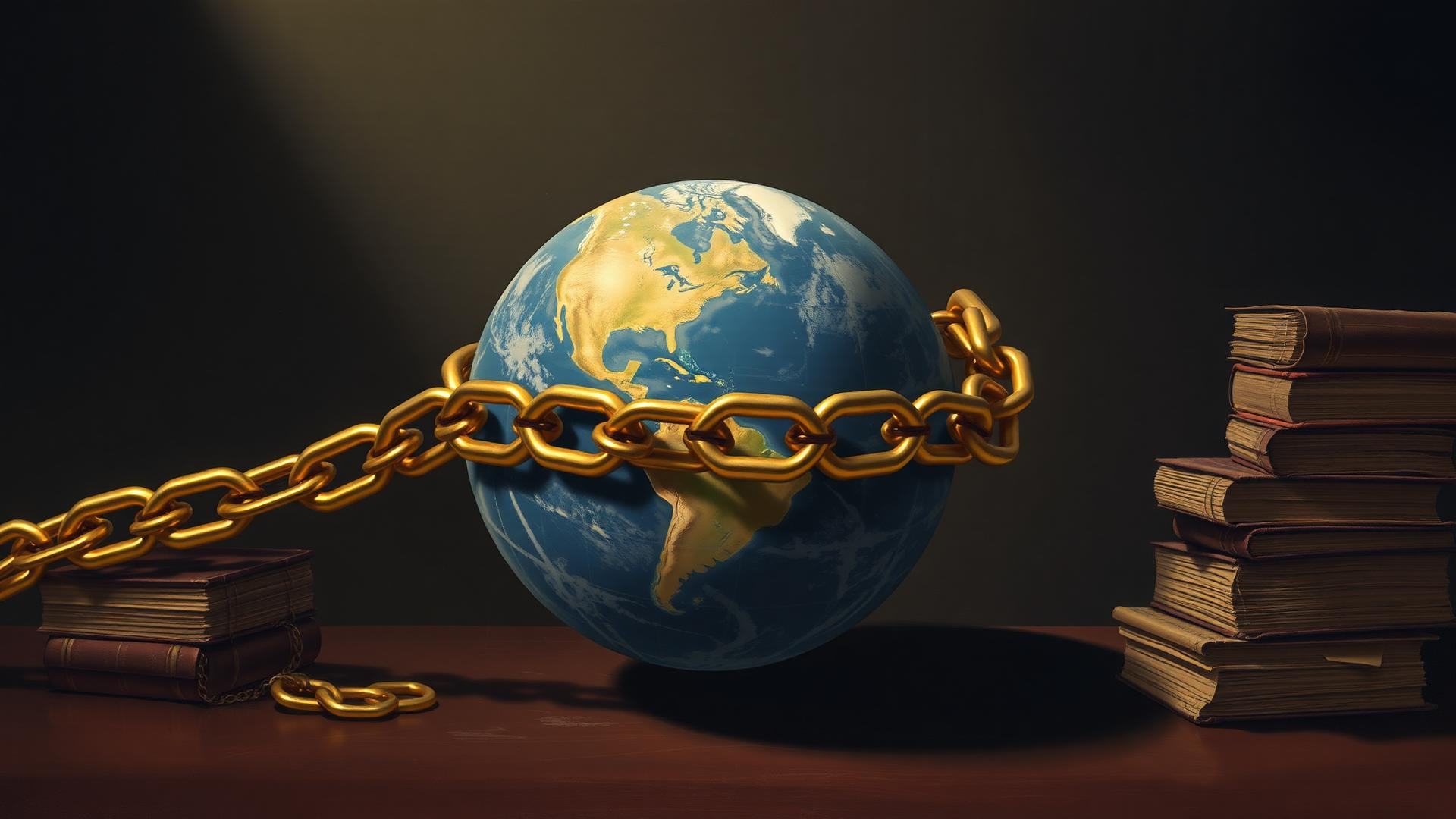
Into that crisis walks the World Conservation Bank, smiling. Its offer is straightforward. We will swap your debt for your land. You hand us title to your forests, your wetlands, your watersheds, your minerals in the ground. We will mark your ledger as paid. You will continue to live on the land. You will not own it. You will manage it on our behalf, under conditions we set.

Wilderness was the wrapper. Mortgage was the substance.

Read it as a contract and it is the largest land transfer in human history, larger than the partition of Africa at Berlin in 1885, larger than the breakup of the Spanish empire, larger than the enclosures of the English commons. It moves the legal title to roughly a third of the surface of the earth into a single collateral pool. The men in the Denver room understood this. That is why they were there. Wilderness was the wrapper. Mortgage was the substance.

The Rio summit, five years later, did not announce this. It did not have to. It produced the legal scaffolding under which the swaps could proceed, normalised the language in which they would be described, and trained a generation of officials in capitals from Lagos to Quito to Jakarta to administer the resulting estates. Nobody was made to sign anything they could not later defend in public. Everyone was made to sign.

Chapter VIII

Green wrapper, old machine.

Why environment was the perfect chassis for an old project.

Choose your wrapper carefully and you can move almost anything past almost anyone. The men running the wilderness congresses in the late 1980s were not stupid. They had run the empire in khaki, they had run it in Sunday school clothes, they had run it in central banker grey. By 1987 the wrapper they reached for was green.

The reasons were obvious if you sat where they sat. Environmental concern was the only argument in the western world strong enough to override national sovereignty without firing a shot. A government that would not permit a foreign army on its soil would willingly sign a treaty surrendering jurisdiction over its own forests. A population that would riot if the prime minister sold the post office would cheer if the prime minister signed an agreement to save the planet. The cause was real. The cause was also exploitable.

And exploitation does not require cynicism on the part of the foot soldiers. Most of the people who do the day to day work of the green apparatus, the local biologists, the conservation officers, the climate scientists, the NGO administrators, are sincere. That is the design. A platform that runs on sincere people at the bottom and contracts at the top is far more durable than one that requires everyone to be in on the trick. Lang said it himself in Denver. Sell it not through a democratic process. Use the cause to do the lifting. The contracts arrive afterwards.

Maurice Strong, the convener of the Stockholm conference in 1972 and of Rio in 1992, ran on this logic for forty years. He was a Canadian oilman who became a senior United Nations official without ever holding elected office, who chaired commissions and advisory boards across both, and who shifted seamlessly between the language of pollution control and the language of capital markets. He served the Rockefellers and he served the Rothschilds. He served the United Nations. He served himself last, but always well. When you read about Earth Summits, climate conferences, sustainable development goals, planetary boundaries, you are reading the long shadow of Strong's playbook.

A platform that runs on sincere people at the bottom and contracts at the top is far more durable than one where everyone is in on the trick.

The playbook is still running in 2026. The vocabulary has updated. The wrapper is no longer wilderness, it is climate, biodiversity, sustainability, ESG, net zero. The chassis underneath is identical to what Hunt watched being assembled in Denver in 1987. Same families. Same banks. Same legal mechanism. Debt swapped for title. Title pooled in collateral. Collateral leveraged in capital markets. Population trained, by sincere people, to applaud.

Chapter IX

From Rio to the ledger on your phone.

How the 1992 chassis became the 2026 metering system.

The line from Rio in 1992 to the carbon market on your phone in 2026 is not a metaphor. It is a sequence of treaties, institutions and product launches, each one anchored in the document that came before it. Trace it once and you will not need to be told what comes next.

1992. Rio. The Framework Convention on Climate Change is signed. It does not bind anyone to anything yet. Its job is to install the conceptual unit. Carbon dioxide as the meterable substance. The atmosphere as the commons. National emissions inventories as the accounting layer.

1997. Kyoto. The first protocol under the Framework Convention assigns binding emissions targets to industrialised countries and creates the first three carbon trading mechanisms. International Emissions Trading. Joint Implementation. The Clean Development Mechanism. The unit of trade is the tonne of carbon dioxide equivalent. A market is born for a substance previously considered weather.

2005. The European Union Emissions Trading Scheme goes live. Twelve thousand industrial installations across the continent are now metered, capped and trading. The Conservation Bank concept that Rothschild dictated in Denver in 1987 has, two decades later, found its working form. Not a single bank with title to the world's forests. A continent wide trading floor with title to the right to emit.

2015. Paris. The Framework gets its second protocol. Every country, rich or poor, signs nationally determined contributions. The architecture is now planetary. The unit, still the tonne. The accounting layer, still inventories. The enforcement, still the financial markets via the price of the permit.

From 2018 onward the same chassis migrates into private finance under the label ESG. Environmental, social, governance. Pension funds, insurers and central banks adopt frameworks under which a company's access to capital is conditional on its alignment with the metering system. Bloomberg, MSCI and the rating agencies sell the scores. The Bank for International Settlements, in Basel, integrates climate risk into bank capital rules. The men who set the rules in Basel are, by lineage and by employment, the men who set the rules in Rio.

Cap the permit and you cap the human.

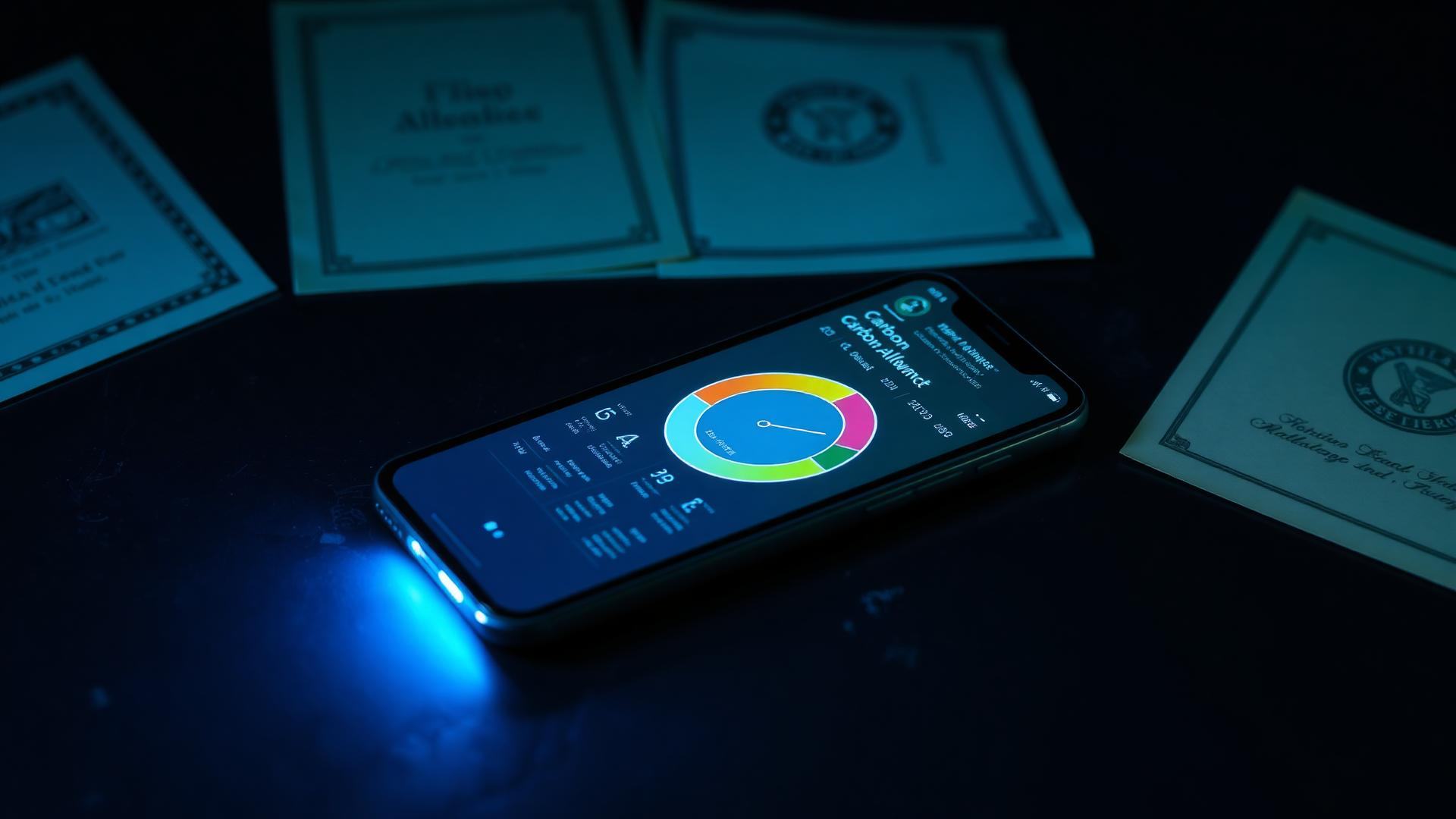
By the early 2020s the conceptual unit has migrated again, this time onto the consumer. Personal carbon allowances move from academic paper to working pilot in several northern European cities. Your bank statement starts to show, alongside the price of your shopping, the carbon weight of the basket. A quiet rollout. No legislation needed. The infrastructure is already there because the chassis is.

By 2026, where you are reading this, the carbon ledger is no longer aspirational. It sits inside your phone, attached to your bank account, attached to your travel records, attached to your meter at home. It does not yet have full enforcement teeth in most jurisdictions. It will. The teeth are the digital identity wallet that every G20 government now has on its policy roadmap and that the European Union has already legislated. Wallet plus ledger plus permit equals the meter. Cap the permit and you cap the human.

None of this needed a coup. None of it needed a war. It needed a logo with a hand on it, a summit with an unsayable name, a banker dictating into a microphone in Denver in 1987, and three decades of patience.

Chapter X

What he asked you to do.

Show it to five people. The closing instruction.

George Hunt died in 2013. The video letter he made in May 1992 sat on shelves and websites for two decades, watched by a small audience, dismissed by the people it was about. The summit went ahead. The treaties were signed. The chassis was built. He was right about every structural prediction in the tape and got no credit for it, because by the time the predictions came true the people he had warned had moved on to the next emergency, which was always, by design, the next move on the same chassis.

The closing instruction in his tape was almost embarrassingly modest. He did not ask you to overthrow anything. He did not ask you to vote for anyone. He asked you to show the tape to five people. A judge down the street. A councilman you knew. A neighbour. He said he believed somebody, somewhere, would set the spark off, and that it was not too late.

Take the instruction literally. The work of the Zero Trust Network is the same work, in a different decade, with better tools. We are not asking you to march. We are asking you to forward this dossier to five people who would never normally read it. A relative who works in finance. A friend who runs a small business and is being handed an ESG questionnaire by their bank. A teacher who is being asked to integrate sustainability into the curriculum. A councillor who is voting next month on a net zero plan. Send it to them with a single sentence. Read this. Tell me what you think.

If three of the five never reply, that is fine. The other two will not forget. That is how the floor moves under a system like this. Not by collapse. By recognition.

And in the meantime, the practical instruction: get yourself off the metering rails. Hold a portion of your savings in instruments the platform does not control. Learn how the digital identity proposals in your country actually work, before they are presented to you as a fait accompli. Refuse the convenience that costs you the permission. Keep enough cash in the house to live for a fortnight. Know your neighbours by name.

Not by collapse. By recognition.

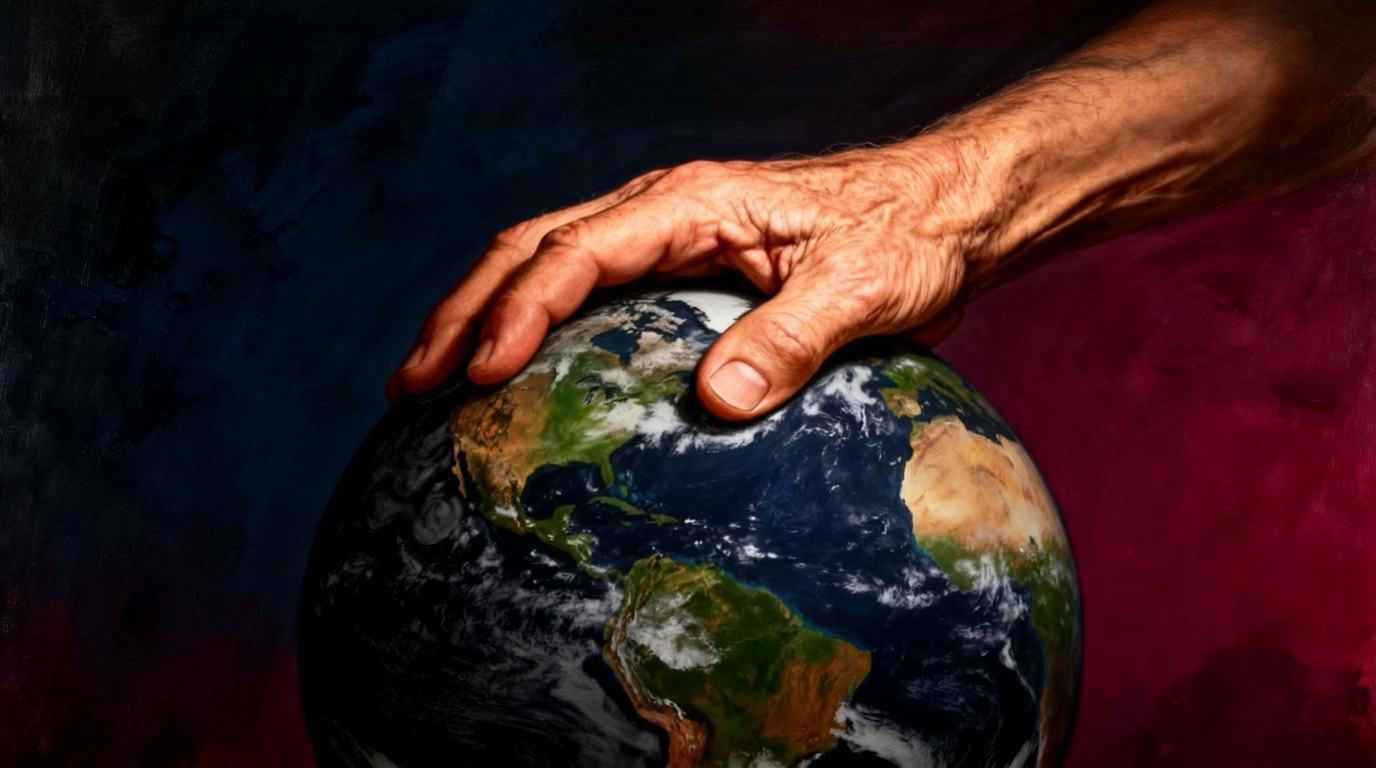
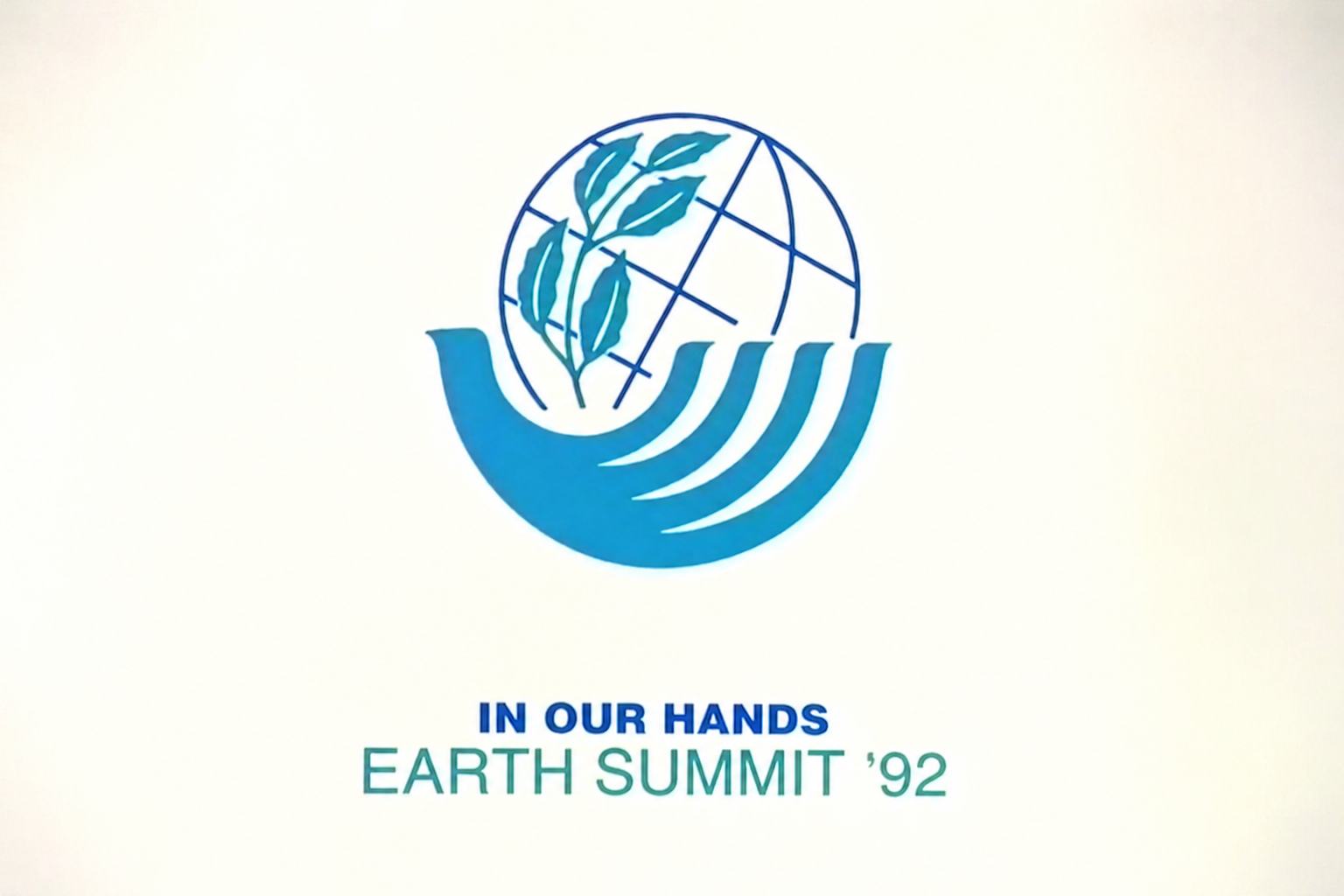
None of that is dramatic. All of it is corrosive to the chassis. The chassis depends on you not noticing the hand on the globe. Notice it. Name it. Show the logo to five people and ask them what they see. If even one of them, looking properly for the first time, says it is not a dove, you have done what Hunt was asking for.

He was not a professional actor. His memory did not always serve him with the things he wanted to say. He read from a script and apologised for reading from it. And he was right.

Unmasked Dossier 03

Next: the wallet, the ledger, the meter.

We open the file on the digital identity rollout, name the standards bodies driving it, and show you the line that connects the eIDAS wallet in Brussels to the carbon allowance pilot on your bank statement. Same chassis. Newer paint.

If this dossier moved you, do the small thing.

Send it to five people who would never normally read it. That was the instruction in 1992. It is still the instruction now. Recognition, repeated quietly, is what eats the chassis.

Sources

Primary source: the May 1992 video letter recorded by George Washington Hunt in Boulder, Colorado, including verbatim audio of David Lang and Edmund de Rothschild speaking at the Fourth World Wilderness Congress, Denver, September 1987, and the Secretariat for World Order document distributed at the Des Moines caucus. Cross referenced against the published proceedings of the Rio Earth Summit (June 1992), the Kyoto Protocol (1997), the Paris Agreement (2015), the European Union Emissions Trading Scheme regulations, the Bank for International Settlements climate risk framework, the eIDAS 2 regulation (EU 2024/1183), and contemporaneous reporting from the New York Times, the Financial Times and Reuters. Direct quotations from Lang and Rothschild are reproduced as evidence and clearly attributed. All narration is Unmasked's own.